
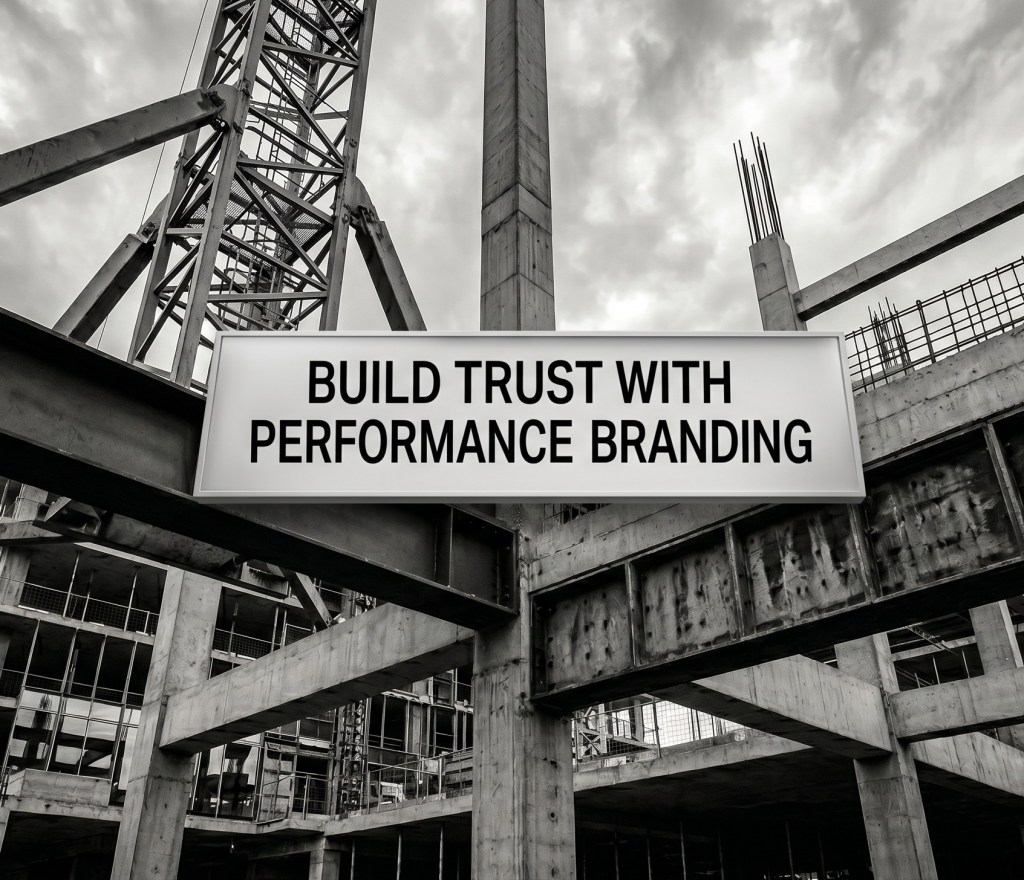
The False Choice Between Brand and Performance
Modern marketing has created a false divide.
On one side, performance marketing promises measurable results: clicks, leads, conversions. On the other, brand marketing promises long-term equity: awareness, trust, and recall. Organizations often feel forced to choose between the two.
That is the wrong question.
The real objective is not to choose between brand or performance. It is to build trust at scale and trust requires both.
Performance finds attention.
Brand captures attention.
Performance branding earns attention.
The Foundation: Right People, Right Place, Right Time
At its core, performance marketing is simple:
Targeting + Channel + Timing = Performance
But simplicity does not mean ease. Each component requires precision.
- The Right People: Defined not just by demographics, but by behavior, need, and context.
- The Right Place: A structured, multi-channel funnel that aligns message with buyer stage.
- The Right Time: Buying stages such as firm growth, funding stage, search intent, or operational pressure.
Too many marketers optimize one variable and ignore the others. Real performance comes from the intersection of all three.
Without that intersection, campaigns become noise, well-funded, but ineffective.
The Funnel Is Not Dead! It Is Misused
The multi-channel funnel remains one of the most practical frameworks in marketing when applied correctly:
- Awareness introduces value.
- Consideration explains value.
- Action proves value.
- Engagement reinforces value.
Each stage requires different channels, different messaging, and different expectations.
The mistake is not using the funnel. The mistake is treating every stage the same.
Running conversion-driven messaging at the awareness stage is inefficient. Running broad awareness messaging at the decision stage is ineffective.
Performance improves when messaging aligns with buyer intent, not internal urgency.
Brand Recall: The Missing Multiplier
Here is where most performance strategies break:
They ignore memory.
You can reach the right person, in the right place, at the right time, but if they do not remember you, you lose.
Consistency + Frequency = Brand Recall
Brand recall is not built through a single campaign. It is built through repeated, consistent exposure that creates familiarity. And familiarity builds trust.
The question is not whether someone saw your ad.
The question is:
When the buying moment comes, do they think of you first?
That is mental availability. And mental availability drives market share.
Brand Is Not Aesthetic: It Is Identity
To build recall, a brand must be clearly defined.
If your brand were a person:
- Who are they?
- How do they speak?
- What do they stand for?
- Who do they serve?
Without clear answers, marketing becomes inconsistent. And inconsistency destroys recall.
A strong brand:
- Uses a defined tone and voice
- Maintains visual coherence
- Speaks to a specific community
- Reinforces the same positioning repeatedly
Brand is not decoration.
Brand is recognition under pressure.
Precision Messaging: Where Trust Is Won
Attention is earned through relevance.
Generic messaging fails because it speaks to everyone and resonates with no one. Precision messaging succeeds because it aligns directly with specific pain points.
Examples of effective messaging principles:
- Speak to rejection, not approval (“We fund what others won’t.”)
- Highlight real differentiation (speed, flexibility, human decision-making)
- Reinforce dignity (“You’re a person, not just a number.”)
This is not creative writing. It is strategic alignment between:
- Customer pain
- Product capability
- Market gap
When messaging reflects reality, trust begins.
The Convergence: Performance + Brand
Performance marketing without brand is transactional.
Brand marketing without performance is unaccountable.
Performance branding combines both into a system:
- Targeted segments (e.g., CFOs in manufacturing)
- Defined channels (LinkedIn, Google Search)
- Funnel alignment (awareness to retargeting)
- Brand reinforcement (value proposition, differentiation, proof)
The outcome is not just leads.
The outcome is qualified trust at scale.
Case Insight: Trust Requires Physical Presence
One of the strongest lessons in modern marketing is counterintuitive:
Not all trust is built digitally.
In a campaign designed to grow deposits for an online bank, physical billboards were used to establish legitimacy in local markets. The result was not just awareness, but credibility, a signal that the brand exists in the real world.
This physical familiarity made digital campaigns more effective.
Because once a brand is recognized, digital interactions are no longer cold.
They are confirmations, not introductions.
The Future: Competing in an AI-Saturated Market
As advertising becomes more automated and AI-driven, the volume of content will increase dramatically.
This creates a new challenge:
Being seen is no longer enough.
In a world where every company can generate ads instantly, the differentiator will be:
- Clarity of message
- Strength of brand identity
- Consistency of execution
The brands that win will not be the loudest.
They will be the most recognizable and trusted.
Final Principle: Earn the Right Attention
Marketing is not about forcing attention.
It is about earning it.
- Performance finds attention.
- Brand captures attention.
- Performance branding earns attention.
And earned attention compounds.
It builds memory.
It builds trust.
It builds growth that is not dependent on constant spend.
Closing Thought
The objective is not impressions.
The objective is not clicks.
The objective is not even conversions.
The objective is this:
When the moment to buy arrives, your brand is the obvious choice.
That is trust.
And trust is the highest-performing asset in marketing.
Please watch a webinar I led with LEOADS.com:
 Noah Cisneros
Leave a comment