
B2B D2C Human-to-Human
Most marketers think neuromarketing means eye tracking, brain scans, dopamine, colors, and clever psychological tricks.
I believe that misses the point.
The most useful neuromarketing lesson is much simpler:
People are people, not just customers.
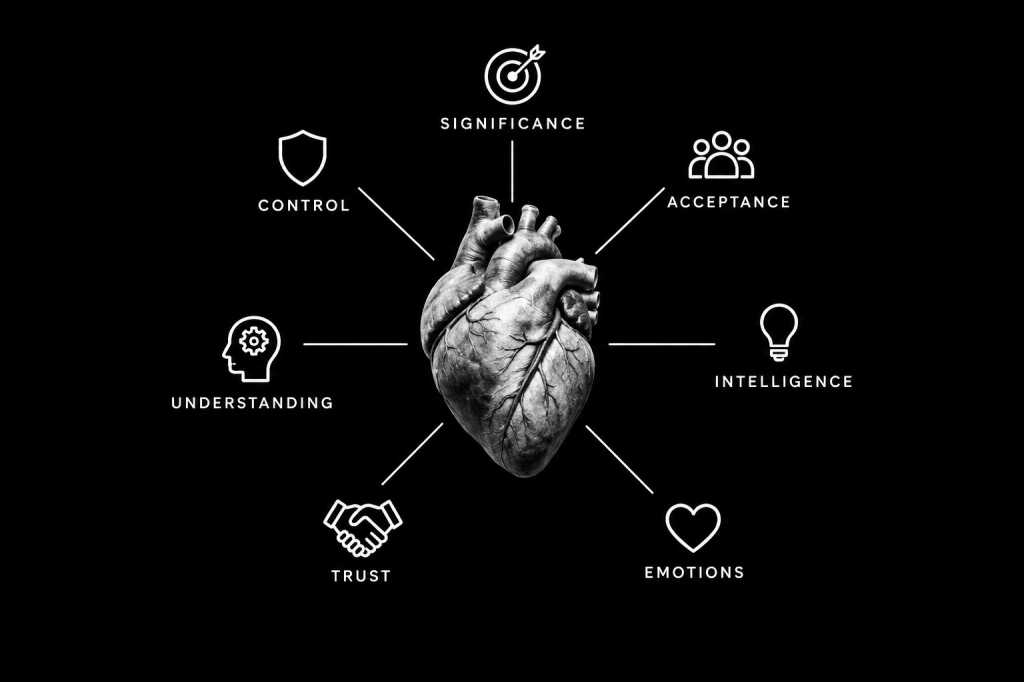
They have egos.
They have fears.
They want significance.
They want control.
They want acceptance.
They want to feel intelligent.
They want to feel understood.
And they absolutely do not want to feel like someone is trying to manipulate them.
This can influence marketing strategy.
From demographics to behaviors
A customer isn’t just:
- 35–54
- Homeowner
- $100K+ income
- Interested in finance
That’s data.
It isn’t understanding.
Good marketing asks a different question:
Why would this person actually care?
In my financial marketing work, I’ve seen this repeatedly.
A product can be technically excellent and still fail because the message doesn’t connect with the person.
Direct, relevant messaging and more tailored experiences can outperform generic communication.
The distinction is not about media; it’s about human behavior.
People pay attention when something is relevant to them.
Here are some core human behavior principles that have helped me craft marketing strategies:
People don’t want to change their minds
One of the biggest mistakes marketers make is assuming that more information creates more persuasion.
It doesn’t.
Sometimes more information simply gives someone more reasons to defend their existing position (not buying).
People don’t want to be told they are wrong.
They want a safe way to become right.
That’s why I like this principle from Dale Carnegie’s book, How to Win Friends & Influence People:
“Give people a safe way to agree with you.“
Don’t attack their identity.
Don’t make them feel stupid.
You can’t force someone to agree. You can’t force someone to buy.
Make buying support their identity.
Show how your product protects their reputation.
People take their coats off for the sun, not the wind.
Your message has to match the person’s world
One of the simplest things you can do is listen.
Use their name.
Let them talk (UGC).
Show genuine interest (show up where they spend time).
Recognize that attention is a form of respect.
When someone feels understood, they are more willing to hear you.
That matters because B2B isn’t really business-to-business.
It’s human-to-human.
The company logo doesn’t sign the contract.
A person does.
The person has incentives.
The person has fears.
The person has a reputation to protect.
The person wants to look competent.
The person wants to avoid making a mistake.
The person wants to feel like they made the decision, not like someone manipulated them into it.
That’s behavior worth understanding.
We live inside our own expertise. Our customers don’t.
What feels obvious to the marketer can be completely foreign to the customer. What feels foreign to the marketer may be completely obvious to the customer.
That’s why good marketing isn’t about proving how smart you are; it’s about proving why your customer deserves the right solution.
Novelty comes before persuasion
Chase Hughes, a human behavior and influence professional, shared the following categories on a episode in the Diary of a CEO:
Human behavior will change when you influence someone’s
- Focus
- Authority
- Tribe
- Emotion
Here is how I see it through a marketing lense:
• Focus : “Break through the noise” with your creative. Focus comes from novelty. Novelty is the unexpected.
• Authority : Use proof to build your authority. Ratings, awards, testimonials, case studies, word of mouth, etc.
• Tribe : Connect your brand to their identity. Think of Nike, Apple, AmEx, and others. Your brand should be a tribe.
• Emotion : Does your solution decrease fear? (financial products) Satisfy greed? (sports betting) Create sympathy? (nonprofits) Think through the emotional side to your product, even especially in B2B.
One of my campaigns used physical billboards to create familiarity and trust for an online bank. The campaign generated more than $22 million in deposits from the local market while building awareness for a brand that consumers didn’t already know.
The lesson wasn’t “billboards are better than digital.”
The lesson was:
Context changes how people interpret a message.
When people repeatedly see a brand in their physical environment, the brand becomes less foreign.
Then digital marketing doesn’t have to introduce a complete stranger.
That’s human behavior.
Make the desired outcome the byproduct
We often call consistent behaviors habits. Most habits have a byproduct or side affect. Intentional habits can have intentional byproducts.
GLP1 medication is used to support weight loss. Weight loss is the side affect, not why GLP’s were created. Intentional use of the medication can create an intentional side affect.
When auditing marketing structures and GTM approaches, I’ve found this thought exercise to be helpful. Instead of asking:
“How do I get more leads?”
Ask:
“What systems (aka habits) would make leads the byproduct?”
Instead of:
“How do I get people to buy?”
Ask:
“How do I become the source for something they already need?”
Instead of:
“How do I get attention?”
Ask:
“What would make this impossible to ignore?”
The best marketing systems don’t constantly force the outcome.
Trying to is a very expensive way to create future churn.
Good marketing creates the conditions where the desired outcome becomes more likely.
- Understand the customer.
- Understand the context.
- Understand the incentives.
- Understand the identity.
- Make the message clear.
- Build trust.
Then give the customer a reason to act.
Because at the end of the day, we’re not marketing to accounts: We’re marketing to people.
Author: Noah Cisneros
10.22.26
Disclaimer: This article does not reflect the stance or opinion of any financial institution or business that I am associated with. It is instead my independent opinion. No products or credit offerings are offered on this site.


Leave a Reply