
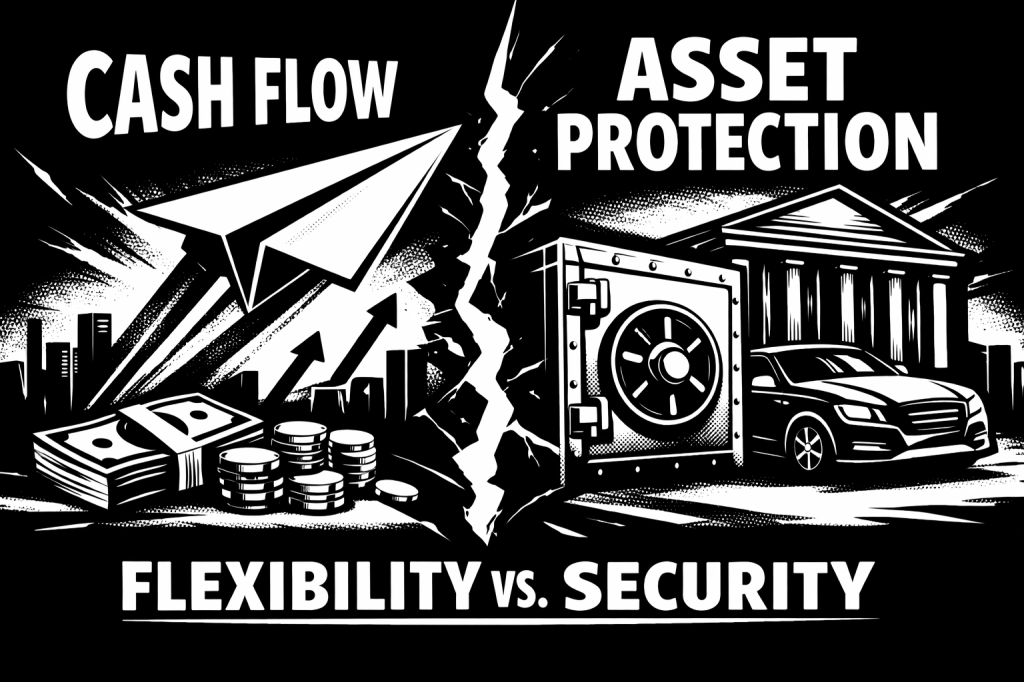
What matters more: cash flow flexibility or asset value protection?
Many business models that experience heavy seasonality operate with tight cash flow cycles. To stay liquid, they often leverage assets as collateral.
Others generate strong, consistent cash flow but carry high-value assets that must be protected from risk.
In both cases, a constant tradeoff exists: liquidity versus value protection.
This isn’t just a business problem, it’s a consumer decision as well.
Do you spend your savings on a nicer car, or do you drive something older so you can keep cash on hand?
Even everyday purchasing decisions reflect this same principle.
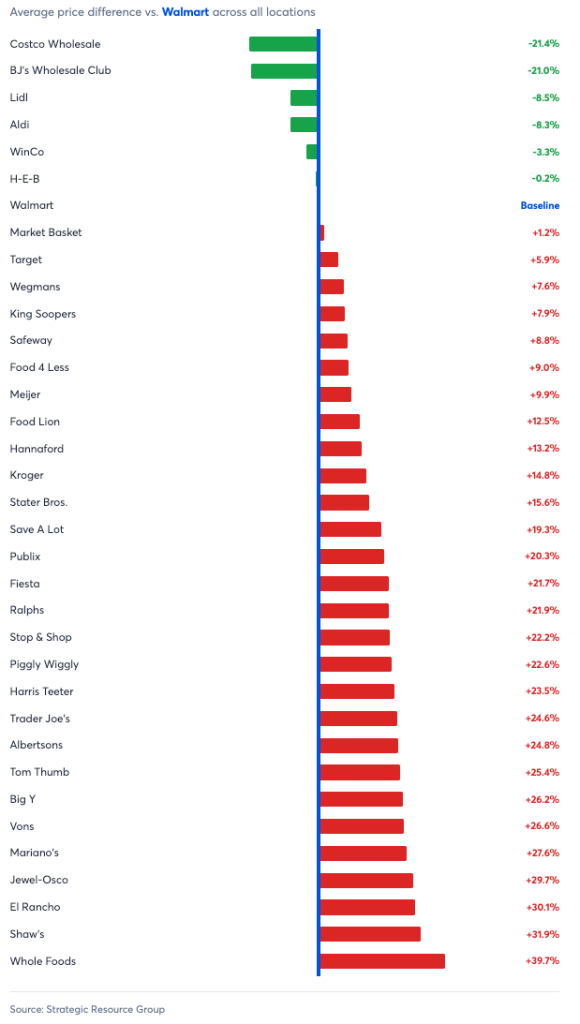
This year, 2026, Costco has been identified as the most affordable grocery retailer in the United States.
As Gabby Romero from Delish explains:
“The wholesale model is clearly one of the most budget-friendly ways to shop for groceries… Shopping at Costco offers much more than free samples and a food court, it also comes with serious savings.”
This report from the Strategic Resource Group reinforces this, comparing major grocery chains and showing Costco as the leading low-cost option:
Consider a simple example:
A pack of eight boxes of macaroni and cheese at Costco costs $15. At Walmart, a single box can average around $3.50, bringing the total to $28 for the same quantity.
That’s a $13 difference.
The value is clear, but so is the tradeoff.
Costco offers better pricing through bulk purchasing (consumer economies of scale), but it requires more upfront capital.
Once again, the decision comes down to prioritization:
cash flow flexibility or maximum value per dollar.
If you have the capital and are optimizing for long-term savings, the decision is straightforward.
If you need liquidity or prefer the security of smaller, incremental spending, paying more per unit can still be the right choice.
Personally, I benefit from a Costco membership by planning, purchasing, and allocating groceries in advance. Over time, this approach has proven more cost-effective than frequent, smaller trips to traditional grocery stores.
How you choose to spend is just as important as what you choose not to spend.
At every level, consumer or enterprise, the question remains the same: are you optimizing for control today or efficiency over time? The best operators understand that neither is universally correct. The advantage comes from knowing which lever to pull, and when.
I couldn’t write about Costco without including the CEO’s powerful message about Costco’s efforts to provide amazing value:
3.20.26
By Noah Cisneros
Disclaimer:
This article is not sponsored or approved by any financial institution that I am associated with. I am NOT a certified personal financial advisor. I am NOT a professional investor. This article is purely educational to provide helpful ideas to improve life. Please use the tools within your reach to personally make any and all decisions for your finances.
 Noah Cisneros
Leave a comment