
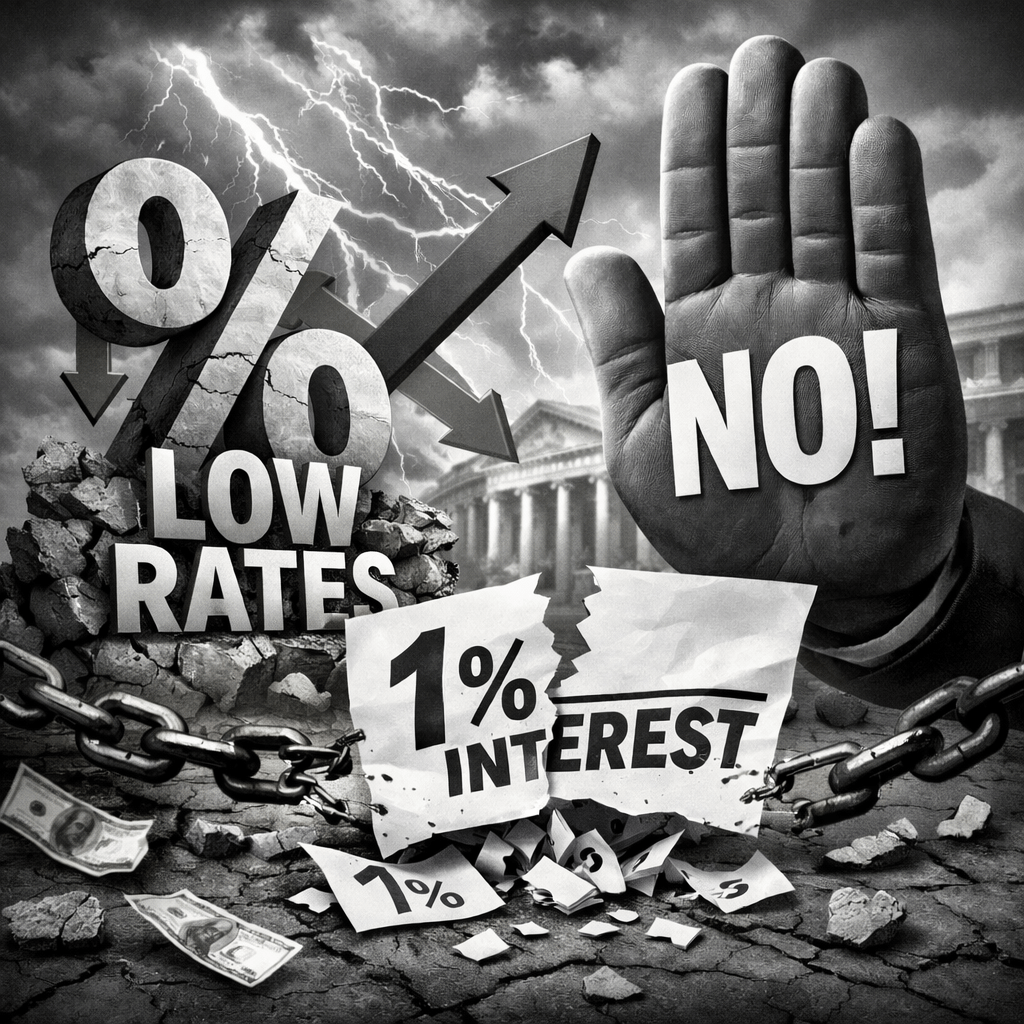
Don’t Borrow Low Rates
Let’s start with the basics.
What are interest rates? Interest rates are the cost of money.
Who sets the interest rate? The Federal Reserve, with US Banks & Credit Unions following suit.
Who is the Federal Reserve? The central bank is chartered with controlling the money supply and the cost of money.
Why does this matter? When the economy is in trouble, the Federal Reserve will often raise rates to discourage people from getting into debt. The problem? Higher rates also make it harder to get out of debt.
When the economy is doing well, the Federal Reserve will often lower rates to encourage consumer consumption and to support people with cheap money, aka low-interest debt.
What I am about to suggest is not a good strategy if you are sitting on a large amount of savings, have massive or passive income, and are looking to increase the wealth you already have.
My argument, however, is focused on helping anyone living paycheck to paycheck:
When interest rates go low, get rid of debt as fast as you can. Especially if any of your consumer debt has a variable rate.
It is very tempting to buy a car or a house when you get approved at a decent rate. However, if you are living paycheck to paycheck or do not already have accumulated wealth, going into debt when interest rates are low can be detrimental to your future self.
Trump is likely to cut credit card interest rates to 10% for a year. Pay off your credit card debt during that time; do not spend more with your credit card during that time.
Why?
Because, like the seasons, after Fall comes Winter: after low-interest rate debt, comes high-interest rate debt.
Often, when the Fed lowers interest rates, debt becomes cheap, and the economy grows. For the average American consumer, however, this debt is overleveraged.
My rule of thumb: If you could not afford the debt at the previously high-interest rate, do not justify the debt at the low-interest rate.
When consumers pile on low-interest debt, or fail to pay off outstanding debt during a low-interest season, they set themselves up for hurt in the winter. They prepare to be stretched too tightly.
When the consumer economy becomes overleveraged, the economy worsens, and inflation increases. To counteract this, the Fed will raise interest rates to discourage consumers from overleveraging themselves. This will decrease inflation and make debt more expensive.
If you piled on as much debt as you possibly could afford during a low-interest season, the high-interest season will destroy your financial security.
My personal recommendation is to avoid debt during low-interest seasons and to pay off as much debt as you can during the low-interest season.
Even if your debt holds a fixed rate, take advantage of the economic season. It will not last forever, and history has shown that the following season is the hardest.
I repeat that this is a note of caution during the US season of lower interest rates for those who are living paycheck to paycheck.
If that’s not you, maximize your return on cheap money, low-cost debt.
But do not be arrogant enough to believe you are a “debt” pro when you are spending more than 30% of your income on housing.
Do not borrow during the season of low-interest rates.
Build as much cash as you can, pay off as much debt as you can, so you are ready for the winter of high-interest rates.
They will certainly come back again, and when they do, you want to be ready.
P.S. If you want to learn more about the Federal Reserve and the mechanics here, this is a great documentary that goes over the high-level historical view of the central banking system.
1.29.26
By Noah Cisneros
Disclaimer:
This article is not sponsored or approved by any financial institution that I am associated with. I am NOT a certified personal financial advisor. I am NOT a professional investor. This article is purely educational to provide helpful ideas to improve life. Please use the tools within your reach to personally make any and all decisions for your finances.
 Noah Cisneros